

My last CEO had a gift. Every Monday, without fail, he would arrive at the management meeting with something new for us to do.
One week, a new engagement initiative. The next, a community survey. The week after, a cross-functional taskforce. Each one landed with its own KPI attached, like a gift nobody asked for but everyone had to sign for.
By month three, my logical brain started asking the question nobody wanted to answer: where do you find the space to add new things if there are none to minus?
Silence. Next slide. Moving on.
This is the corporate default setting. And if you’ve ever watched a kiasu Singaporean approach a buffet line, you already understand the physics. One plate. Infinite ambition. Chye sim at the base. Curry chicken on top. Sushi balanced against the salmon. A prawn somewhere in the middle doing structural work. The plate is now an engineering marvel. Nobel-prize-worthy, really.
Two things tend to happen next.
One, you cannot finish. You pay the penalty and pretend the extra rice was for your friend.
Two, one small sneeze and you are witnessing food avalanche in real time.
The corporate version of this is your Google Calendar. Knowledge workers today take pride in showing you how tight their week is. Back-to-back meetings. Double-booked slots. The occasional triple booking that they mention with a sigh, as if it is a burden, when really it is a flex. Busyness equals productivity, right? At least that’s the theatrical version.
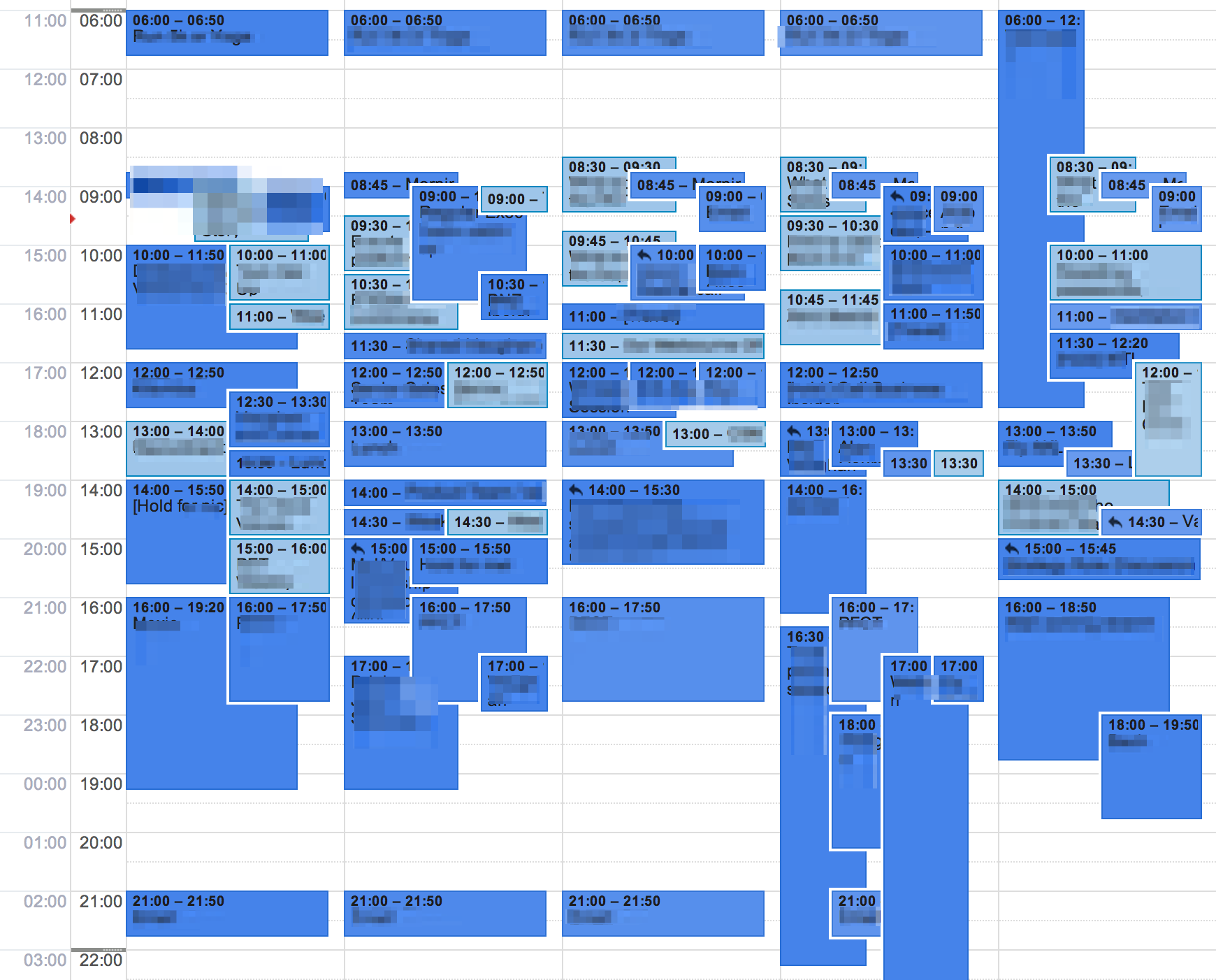
Contrast this with what Warren Buffett once told Bill Gates. Buffett pulled out his diary. It was mostly empty. He said his best days are the ones where nothing is scheduled. Somehow the wisdom of the Oracle of Omaha escapes the rest of us, who keep treating a blank Tuesday like a personal failing.
Closer to home, look at parliament. Every year, a fresh round of schemes, grants, and initiatives. Bold names. Optimistic acronyms. What happened to the old ones? Did we take them away? Did they work? Did they not work? We don’t really know. They’re just under the rug. And the rug now needs new stuff on top of it, to keep the old stuff from showing.
Which brings me to the part that genuinely surprised me.
There is actual science on this. In 2021, researchers at the University of Virginia ran a series of experiments, published in Nature, on how people try to improve things. They gave participants a Lego structure that needed to hold a brick above a stormtrooper figurine’s head. Each Lego piece added costs ten cents. The cleanest fix was to remove one block. Most people added instead.
The researchers concluded that people “rarely look at a situation, object or idea that needs improving and think to remove something as a solution. Instead, we almost always add some element, whether it helps or not.” They went further, linking this bias directly to overwhelming schedules and institutions bogged down in proliferating red tape.
In other words: it is not just your CEO. It is your brain. Additive ideas come to mind quickly. Subtractive ones require cognitive effort. We default to stacking the plate because stacking the plate is easier than thinking.
And once you see the pattern, it’s everywhere.
The gym-goer who keeps adding supplements but refuses to cut the late-night supper. The company that launches a wellness programme while the same leaders send emails at 11pm. The condo that adds a new facility — a pickleball court, a co-working lounge, a wine cellar — every time the MCST meets, and somehow the monthly fees go up but the lifts still break down. The parent who signs the child up for another enrichment class while the homework from the last one sits untouched.
The honest fix in all of these is a subtraction. The instinct is always an addition. Because the addition feels like action. The subtraction feels like admitting the last addition didn’t work.
So here is what I’ve been trying lately. Before adding anything new — a project, a subscription, a meeting, a WhatsApp group, a fourth streaming service I forgot I was paying for — I ask what comes off the plate to make room. Not in a Marie Kondo way. Just a small accounting question. If nothing comes off, the new thing probably isn’t as essential as it felt thirty seconds ago.
Most weeks, the honest answer is that nothing needs to go on. The plate was fine. I just wanted to feel like I was doing something.
My old CEO probably wanted the same thing. Somewhere on his calendar, in a recurring Monday slot, was a meeting called Management Sync. I wonder, sometimes, what would have happened if one week he just cancelled it.
No replacement. No rescheduling. Just an empty hour returned to every person in that room.
Probably would have been the best KPI he ever set.